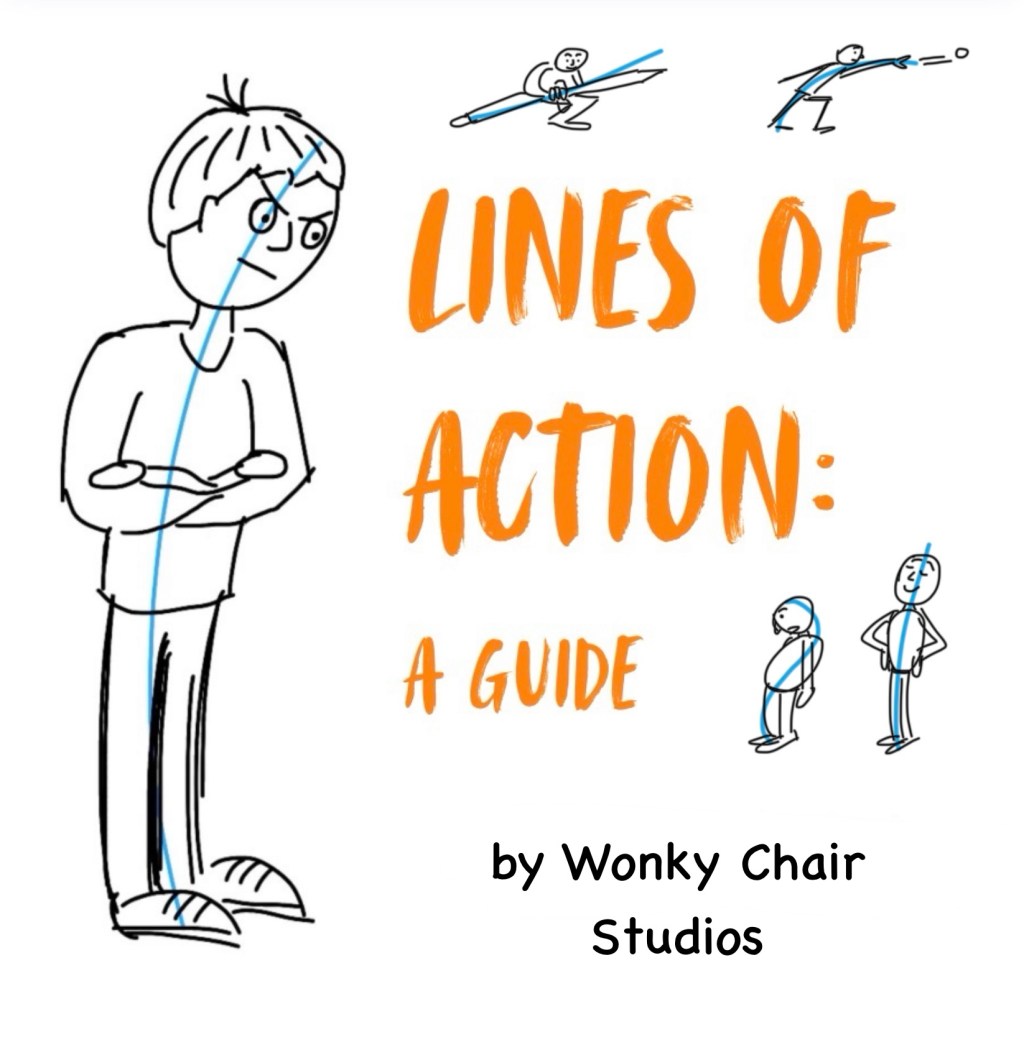
You may have heard animation and art guides talk about what is known as a ‘line of action’. So, what does this mean and how do you use it in character design or animation? This blog post will break things down.
Essentially, a line of action is an imaginary line running from the top to the toes of your character that shows the overall direction and energy of a character’s movement or pose. Instead of focussing on details like arms and legs first, animators use a line of action to determine the energy of the pose. It helps make characters feel more alive, dynamic, and less stiff.
Actually, this is something I am currently working on improving in my own animation work. I have noticed that my characters usually look a bit stiff, which I found out is because they lack the line of action. When I started to use it, though, I realised that even simple poses look much more dynamic.
So now, if you compare both drawings below, which one do you think looks better in terms of movement and dynamism?
Have a good think.
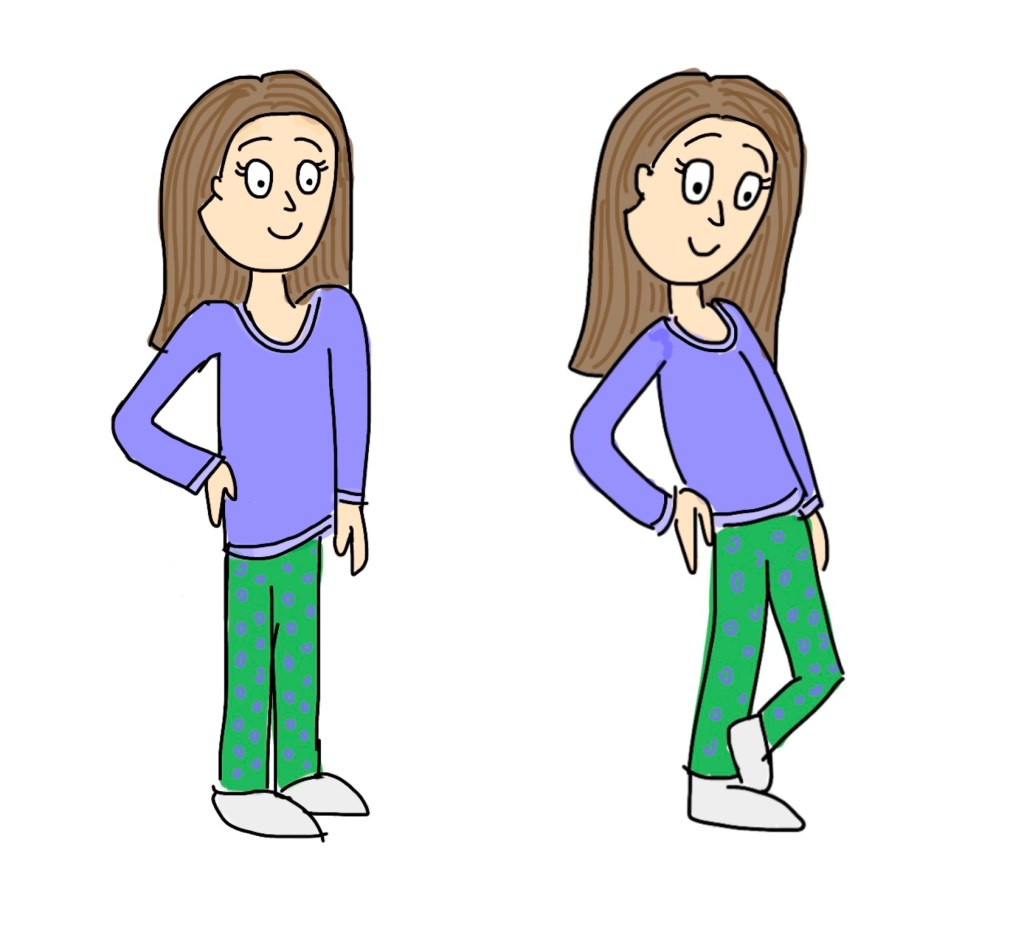
It’s the second one, right? Picture an imaginary line passing through the bodies of both characters. The line in the first drawing is straight as a stick; stiff and unnatural. The line in the second drawing, however, is more curved and has a sense of direction, making the character’s pose more fluid and the movement more clear.
So now that you have identified how a clear line of action elevates a character’s pose, let’s discuss what sort of lines of action work for different personalities, and then how to use lines of action in your own character designs or animations.
Basically speaking, for confident and outgoing characters the line of action generally goes outwards, whereas for shy or reserved characters, the line of action goes inwards. But this is not set in stone: lines of action can vary for different poses depending on the character’s action or emotion.
For example if a normally confident character starts exposing their vulnerabilities after being unable to hide them any longer, their line of action could go slightly inwards and droop, depending on the exact emotion they are feeling.
Now, I will guide you through how to use the line of action in your own creative work.
First, you draw a quick vertical line – curved or straight. This defines the main direction of the pose, and also the emotion the character is feeling.
Then draw the character’s body aligning to the line you’ve just drawn, attaching the arms and legs to it in a position that really conveys the emotion you want your character to express.
Finally you refine the pose until it looks just right, until you can identify your character’s personality or emotion in one quick glance.
Hope you found these tips useful, and be sure to share this blog post to any artists or animation lovers you know!


Leave a Reply